How to Plan an Electric Car Trip Across Uruguay
May 22, 2026
Driving an electric car across Uruguay is increasingly possible, but it still takes some planning. The key is not only how many kilometres of range your car has—it is understanding where you will charge, how long you will stop, and what options you have at your destination.
Useful tools already exist to plan routes, find charging points, and estimate costs. UTE publishes information on electric mobility and vehicle charging, and resources such as Uruguay Eléctrico or EV Uruguay help compare consumption, costs, and distance.
Before you leave: range, route, and buffer
Start with your car's real-world range. Do not rely on the factory figure alone—on the road, air conditioning, wind, higher speeds, or extra load can change performance.
When planning an EV trip, it helps to:
- Check available range before you leave.
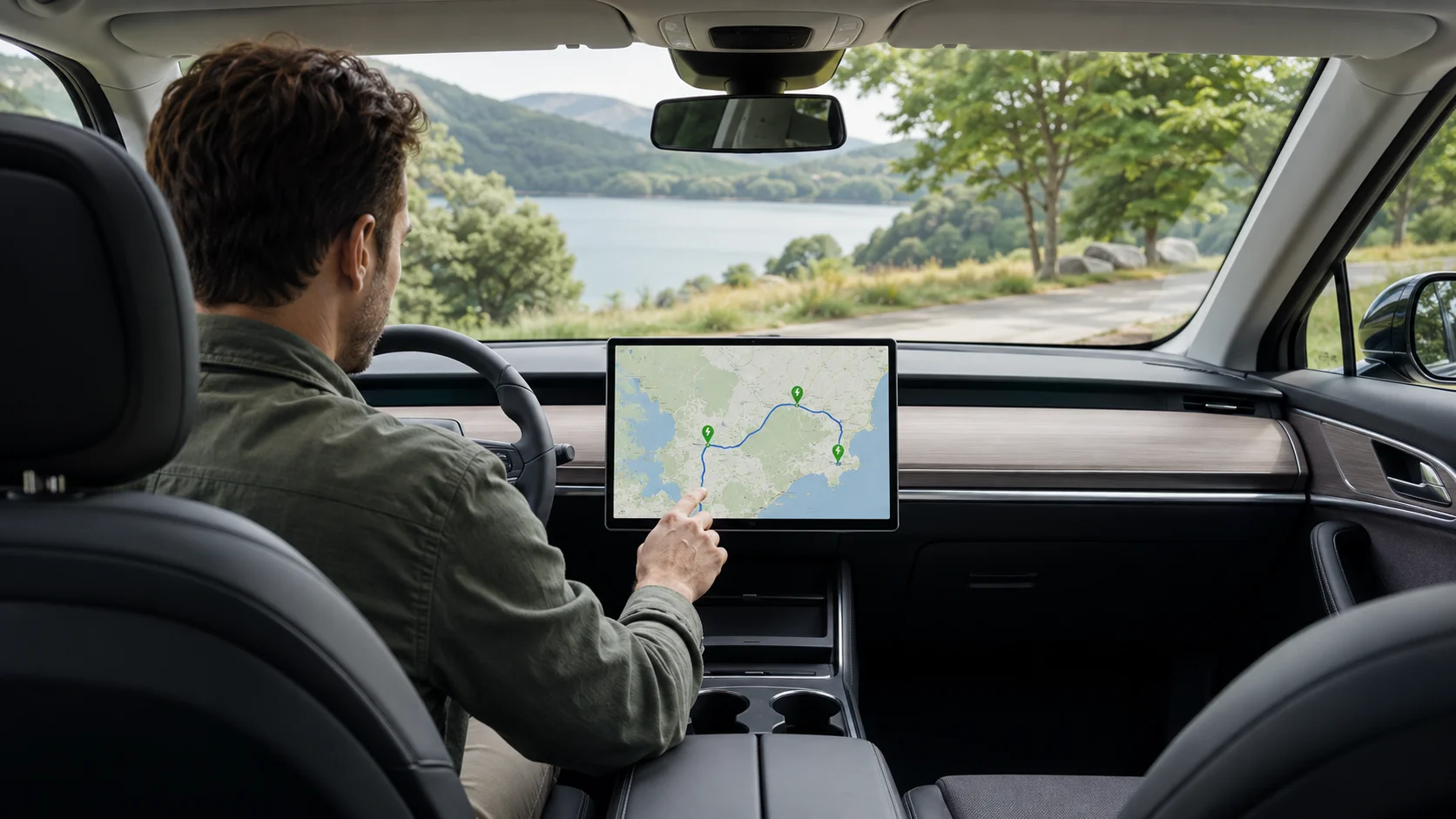
- Identify charging points along the route.
- Leave a battery buffer for surprises.
- Confirm whether the charger is working or available.
- Avoid depending on a single stop.
Quick checklist for a smoother trip
- Leave with a good initial charge.
- Plan a main stop and a backup.
- Check connectors, power, and opening hours.
- Prioritise places you would stop anyway: hotel, restaurant, museum, shopping centre, or tourist site.
Not everything has to be fast charging
When we picture EV road trips, we often think of fast chargers along the highway. They matter, but they are not the only answer.
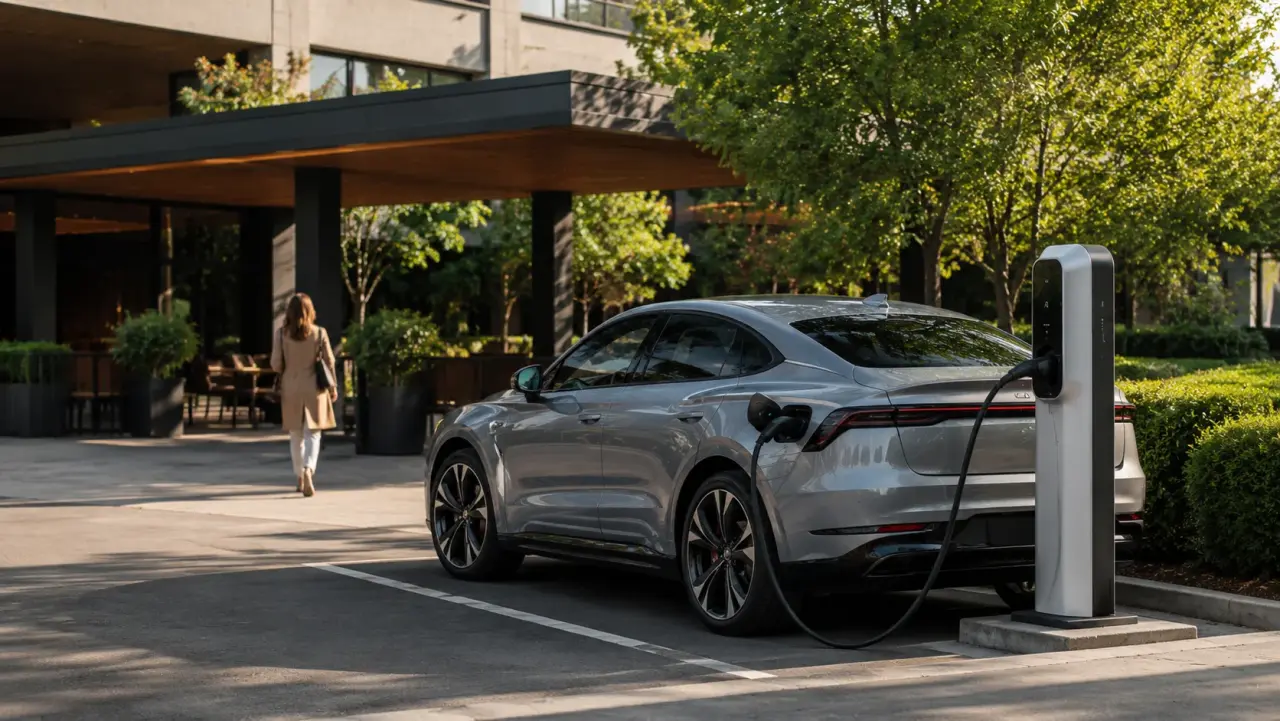
Often the most comfortable option is charging while you do something else: lunch, a museum visit, an afternoon at a shopping centre, or an overnight at a hotel. Charging stops being a wait and becomes part of the trip.
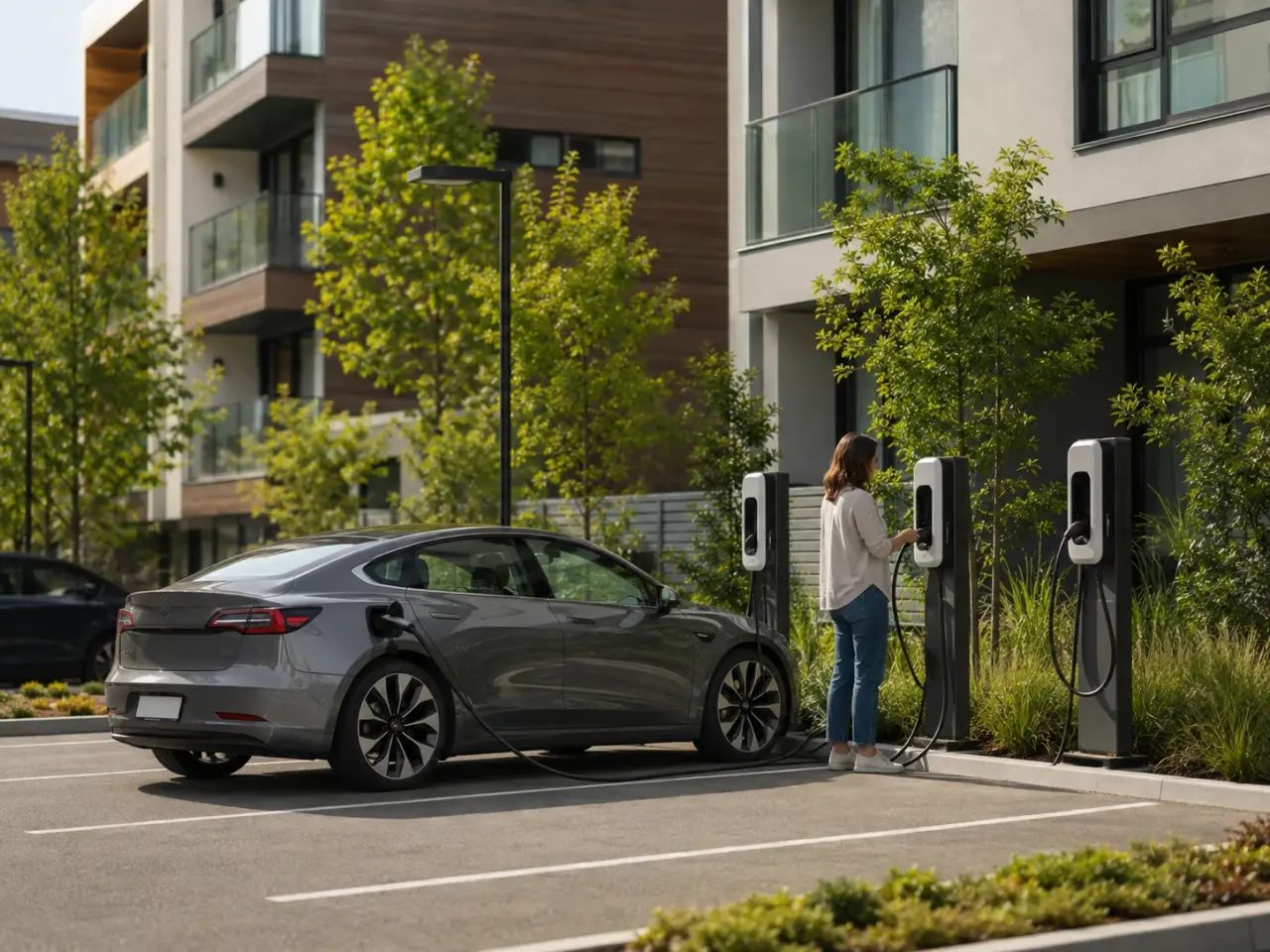
That is why destination charging matters more and more: hotels with EV chargers, restaurants with charging, car parks, clubs, wineries, museums, shopping centres, and tourist attractions.
The experience improves when more places offer charging
Uruguay has been working on issues such as EV charging interoperability so that charging is simpler, clearer, and more accessible for drivers.
Beyond the public network, the country needs more charging in private and semi-public spaces. For travellers, knowing there is a charger in town is not always enough—it needs to be near the route, accommodation, or the day's plans.
That is where solutions like CarCharge can help.
How CarCharge fits into the trip
CarCharge helps more places offer EV charging in an orderly way: hotels, restaurants, museums, shopping centres, car parks, clubs, and other spaces where people already spend time.
For drivers, that means more convenient options along the way. For businesses, it means attracting EV visitors without complicating daily operations.
A hotel can offer overnight charging. A restaurant can let guests charge over a meal. A museum or tourist site can add value to the visit. A shopping centre can turn a longer stay into a charging opportunity.
Plan better for a calmer trip
An electric road trip in Uruguay does not have to be complicated. It mainly means shifting mindset: instead of treating charging as an emergency, build it into the itinerary.
If you know where you will stop, how long you will be there, and what alternatives are nearby, the trip becomes more predictable.
As more businesses and destinations join the network, charging an EV will feel more like it should: simple, convenient, and tied to places you already wanted to visit.
If you run a hotel, restaurant, shopping centre, museum, or tourist destination, learn how to offer EV charging with CarCharge and be part of a network built for electric mobility in Uruguay.