EV Charging in Residential Buildings: How Shared Infrastructure Works
August 19, 2026
Electric mobility continues to grow in Uruguay. According to ACAU figures reported by El Observador, 7,358 electric vehicles were sold during the first four months of 2026, 133% more than during the same period in 2025.
As more people switch to electric cars, residential buildings face an increasingly common need: giving residents a practical way to charge where they live.
The challenge is not only installing a charger. It is also deciding how the infrastructure should grow as more residents need to charge.
When each resident installs their own solution
One option is for each owner to run an installation from the electrical supply of their apartment to their assigned parking space.
This can solve an individual need, but as more EVs appear, the building may end up repeating conduit, cabling, protections, and installation work for every new user.
Beyond the cost of each installation, this approach can also make long-term infrastructure planning more difficult.
When the building uses common charging infrastructure
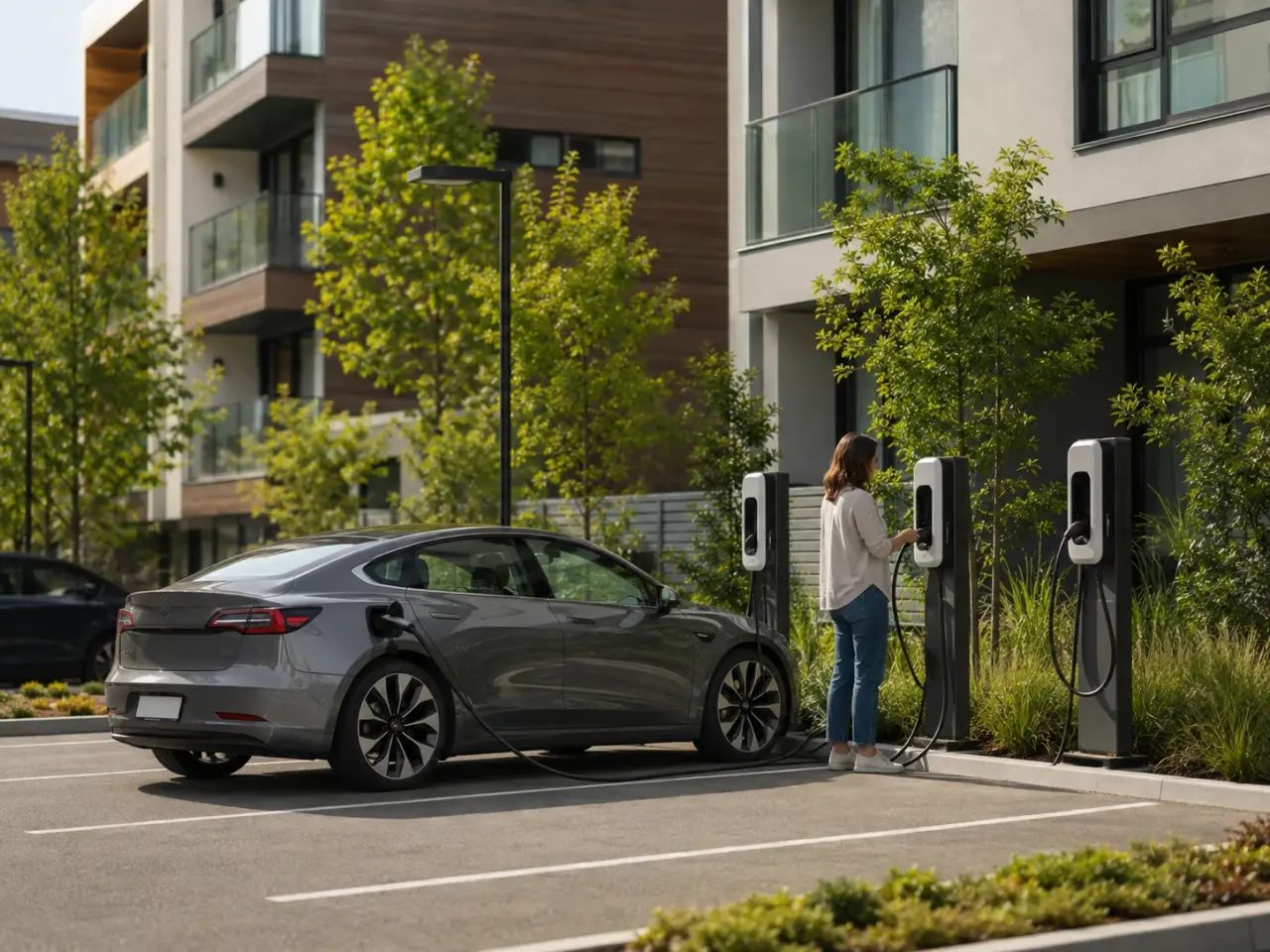
Another option is to develop centralised charging infrastructure, using either the building's existing electrical supply or, depending on the project, a dedicated supply for EV charging.
This can allow part of the infrastructure to be shared, but it creates other requirements: identifying each resident's consumption, billing users individually and, when electrical capacity is shared, managing the power available.
Two approaches, different challenges
- Individual installations: each user relies on their own electrical supply, but installations and physical infrastructure are repeated.
- Common infrastructure: resources can be centralised and shared, but users, consumption, payments and, where applicable, available power need to be managed.
There is no single solution for every building
The most suitable approach depends on the existing electrical installation, parking layout, number of EVs today, and expected future demand.
It also depends on whether parking spaces are assigned or shared. Some buildings may need connections extended to individual spaces, while others may use a smaller number of chargers shared by several residents.
The key is to avoid treating every new EV as a completely separate infrastructure problem. Planning at building level makes future growth more organised.
How CarCharge can help
CarCharge works with residential buildings to evaluate and implement charging solutions adapted to each situation.
The approach combines charging infrastructure with a platform for managing users, charging sessions, consumption, tariffs, and payments.
- Automatically record the energy consumed during each charging session.
- Associate consumption with the correct user.
- Manage tariffs and payments without manual calculations by building management.
- Monitor and manage chargers remotely.
- Add new users progressively as demand grows.
When common electrical infrastructure is used, different approaches for distributing available power among connected vehicles can also be evaluated.
Think beyond the first charger
A building may have one or two electric vehicles today and many more over the coming years. Planning the infrastructure from the beginning helps address today's need without losing sight of future growth.
Do you manage a residential building or are you evaluating how to add EV charging? Contact us and we can review which alternatives make the most sense for the building.